LU XUN’S LEGACY
PRINTMAKING IN MODERN CHINA
-
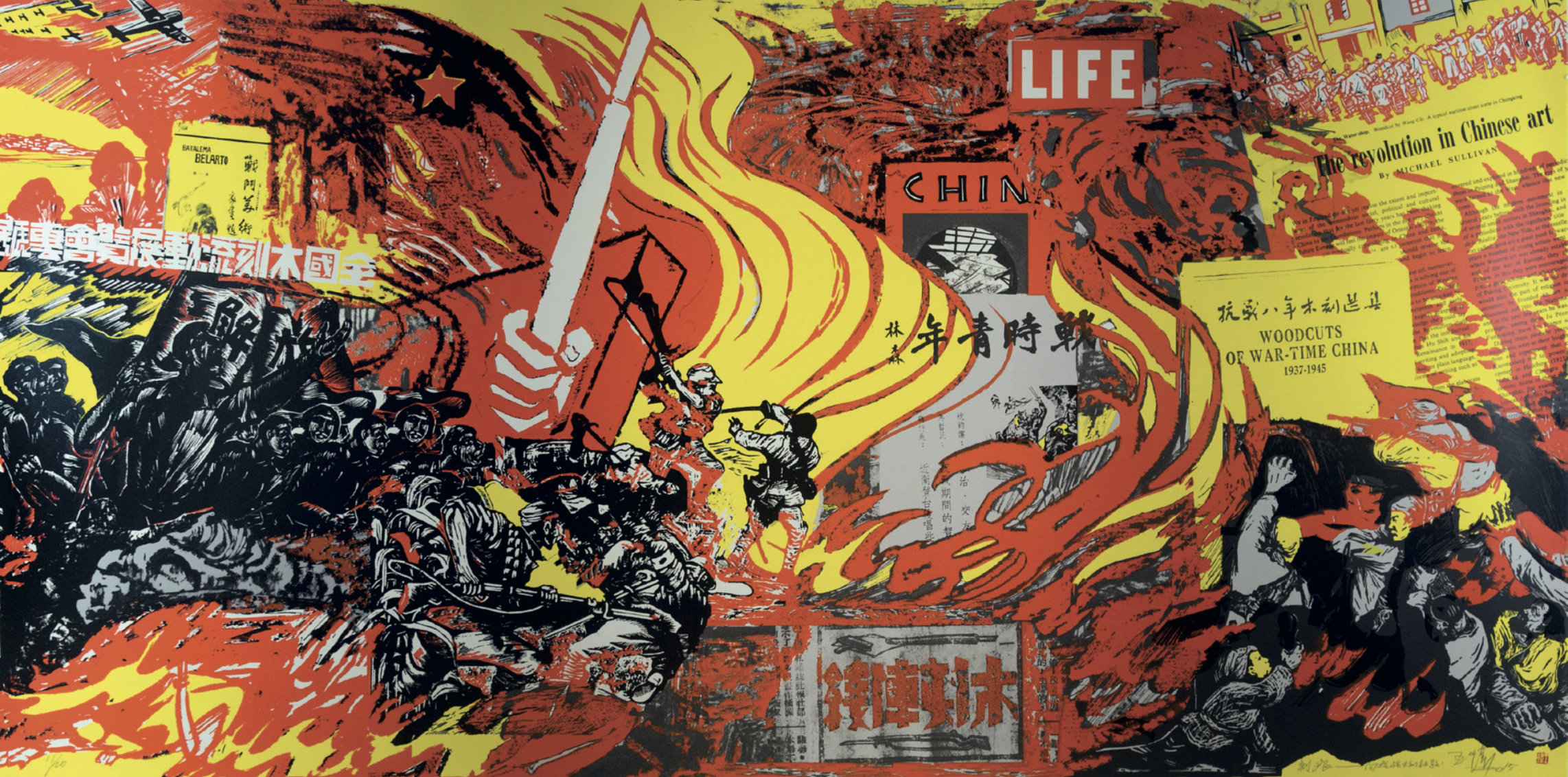
Prints tell the story of China’s twentieth-century wars, revolution and rejuvenation. Lu Xun's Legacy: Printmaking in Modern China celebrates the extraordinary range and versatility of style, technique and aesthetic expression in modern Chinese prints—yet barely scratches the surface of the collection from which it is drawn, the Muban Educational Trust (MET).
This retrospective includes 132 prints, chosen from every decade since Lu Xun (1881-1936) founded the Modern Woodcut Movement in the 1930s, exploring artistic trends, political conflict and technical innovations. Its four sections aim to connect history with the contemporary and message with style and technique.
Arguably the most important cultural figure of twentieth-century China, Lu Xun is still revered for his stories and essays condemning the nation’s backward social and political conditions. Outside China, Lu Xun is less well known, especially with respect to visual culture. He transformed the neglected art of woodblock printing, invented in China more than 1000 years earlier, making the woodblock print a weapon for social change and national resistance. At the same time, he encouraged the revitalization of China’s traditional arts.
The complex crosscurrents of Lu Xun’s activities embody quintessential issues of Chinese culture in the twentieth and twenty-first centuries: westernisation and modernisation, continuity and change, and tradition and innovation. These are not firm dichotomies, but shifting points along a spectrum in a history marked by frequent changes in direction or emphasis. Such tensions are apparent in printmaking during all the time periods in the exhibition.
All works exhibited here are woodblock prints, unless specified.
This exhibition is curated by Mary Ginsberg.
-
This is the first exhibition I’ve worked on with the Muban Educational Trust (MET), and I’m grateful to everyone there for guidance and support. The Trustees and colleagues at the MET are all generous scholars who enjoy sharing their expertise. Anne Farrer set me on the path to learning about prints years ago and brought me into Lu Xun’s Legacy. David Barker researched and compiled the catalogue. He has patiently explained, and explained again, the various techniques of cutting and colouring prints. He Weimin was our lifeline to various artists and their practices. Beth McKillop helped with venues and other practical issues. Frances Wood and John Constable read and corrected the texts. My sincere thanks to Christer von der Burg for his academic and material support in all aspects of this project.
As to development and production, we gratefully acknowledge John McMillan’s work, designing and redesigning the catalogue with extraordinary patience and good humour. We are indebted to Francis Gerard for photographing all the prints. Zheng Haiyao project-managed us all in her inimitable way, smoothing the administrative path, not to mention all those translation questions.
It has been a real pleasure working with colleagues at our exhibition venues. For their enthusiastic and insightful collaboration, we thank, especially, Kirsty MacNab, Ruthanne Baxter and Bianca Packham at the University of Edinburgh; Rachel Barclay and Gillian Ramsay at the Oriental Museum, Durham; and John Hollingworth and Joy Onyejiako at the Brunei Gallery, SOAS.
Finally, the MET gratefully acknowledges the generous support of Cynthia and John Koh, Bernard Quaritch Ltd. and Wang Panian.
Mary Ginsberg
-
With nostalgia, I take pride and satisfaction in this exhibition and catalogue. Nostalgia inasmuch as it brings me back more than twenty years to the period when, accompanied by the late Verena Bolinder-Müller, a friend as good as anyone could have, I travelled all over China. We visited artists and scholars in all the provinces of China, except two, and from whom we acquired most of the prints that are included in this exhibition. Those were hectic but fun days when we were met and entertained by the nicest people possible. Bar the occasional buyer, we were the first serious collectors of contemporary prints and the artists welcomed us to their studios, whether in their academy or their private home. Verena and I had previously agreed that our mission was to encourage the artists by buying their prints, not to take advantage of them and not to bargain on price. If we considered that an artist was asking an inflated price, we declined to buy.
The word soon got around and we rarely encountered an artist asking unreasonable prices. Over the years, during twenty-five trips to China, we assembled the considerable collection of modern Chinese woodblock prints that is the pride and backbone of the Muban Educational Trust today. I share in that pride.
It is very satisfying to see how these prints, individually acquired here and there over time, are assembled to reflect one theme and topic, and how the exhibition increases the dimension and content that is contained in the individual prints. I can do no more than admire the energy and effort of the persons involved in creating this very original and unique exhibition. I especially thank David Barker, Mary Ginsberg, Zheng Haiyao, Anne Farrer and He Weimin, and to the many other individuals who have contributed their time and knowledge, I would also like to offer my warmest thanks.
Christer von der Burg
Chairman of the Muban Educational Trust
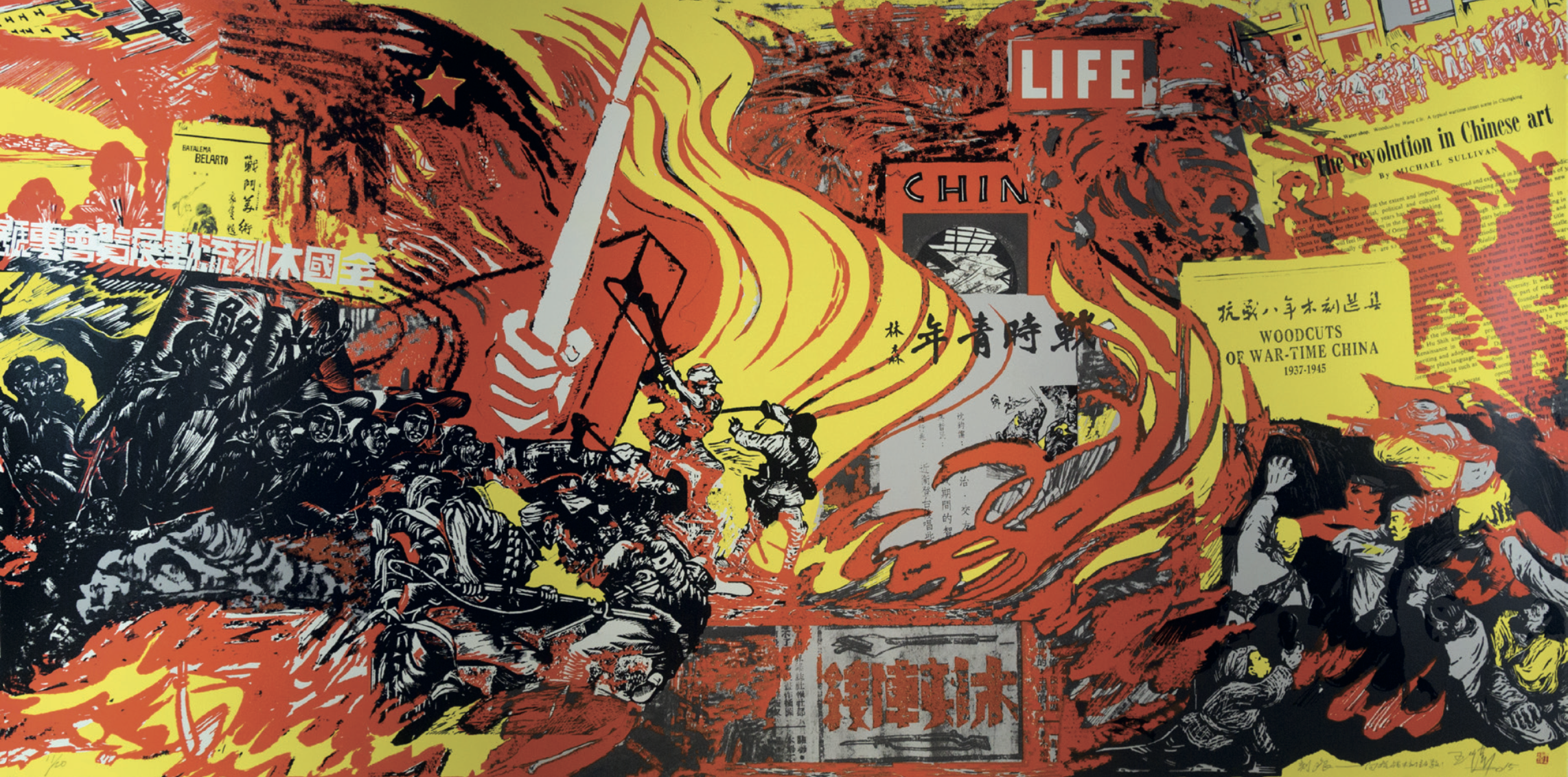
WAng wei and chen yuping
new china
portraits and illustrations
technique